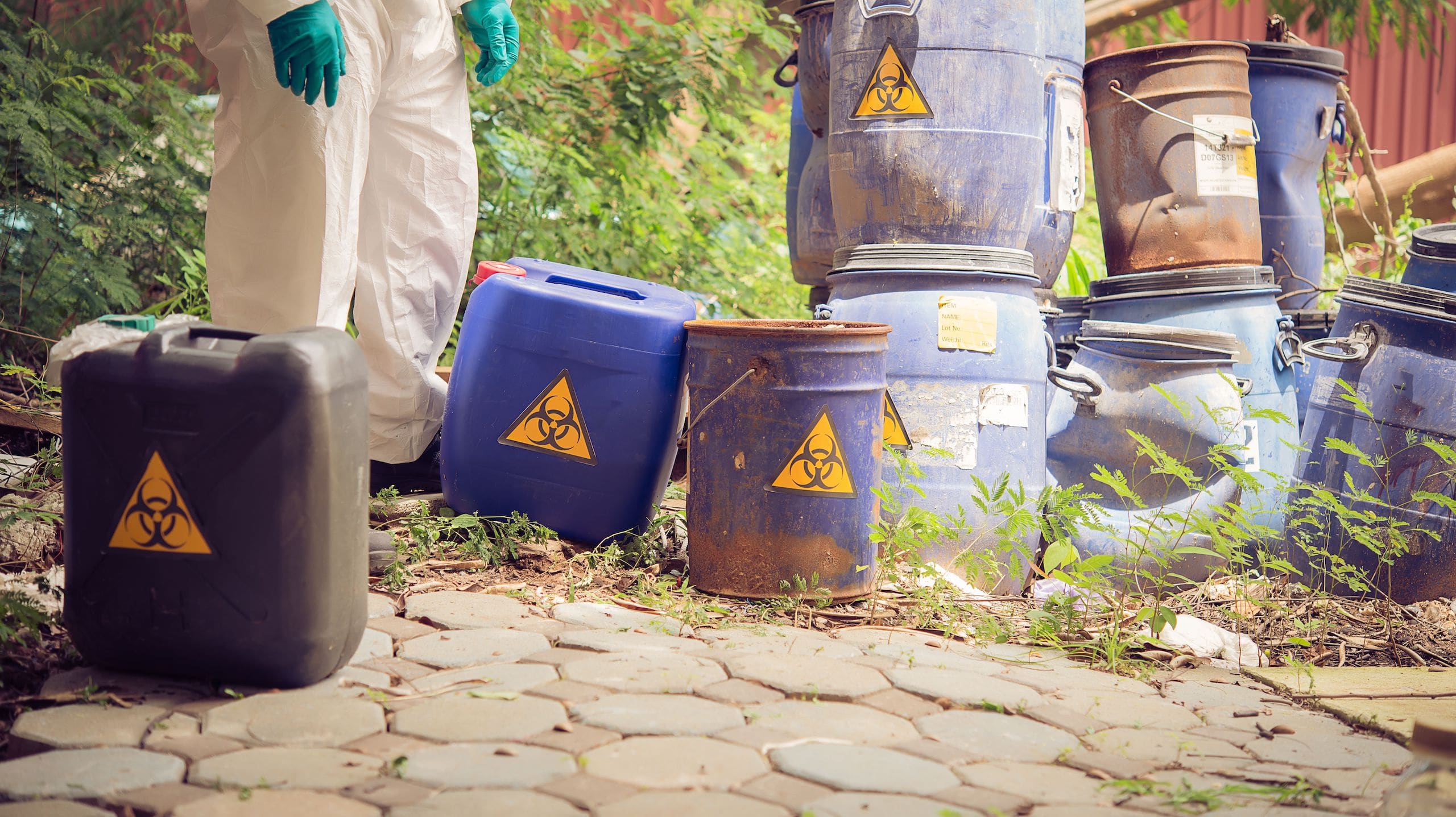
From old tins of paint and used engine oil to broken electronics and fluorescent light tubes, most homes and businesses generate hazardous waste without realising it. Disposing of these materials incorrectly can pollute soil, contaminate water, and release toxic fumes — yet with professional handling, they can be recycled or neutralised safely. At Widdington Recycling, we specialise in hazardous waste disposal across Essex and Hertfordshire, providing a compliant, traceable service for both domestic and commercial clients.
Whether you’re clearing out a workshop, upgrading factory machinery, or managing an office move, understanding what counts as hazardous waste and how to dispose of it properly is vital. This guide explains the key categories of hazardous waste, why safe disposal matters, and how Widdington ensures every item is managed in line with UK environmental regulations.
Hazardous waste is any material that poses a risk to human health or the environment due to its chemical, physical, or biological properties. These wastes are classified as toxic, flammable, corrosive, reactive, or infectious. Because they can cause harm even in small quantities, hazardous waste cannot be disposed of in general waste bins or standard skips.
Common examples include chemical cleaning agents, oils, paints, batteries, fluorescent tubes, contaminated rags, and electrical appliances. Businesses such as garages, farms, printers, and laboratories generate hazardous waste daily, while households often accumulate it unknowingly through DIY projects, garden maintenance, or electronic upgrades.
When hazardous waste is mixed with ordinary waste, it can trigger fires, release harmful vapours, and pollute groundwater. Once contamination spreads, the cleanup process becomes costly and time-consuming — which is why separating and identifying hazardous materials early is essential.
Proper hazardous waste management isn’t just about avoiding penalties; it’s about protecting the environment and demonstrating responsible stewardship. In the next section, we’ll look at the most common types of hazardous waste Widdington Recycling handles — and how each should be stored, labelled, and collected.
Different types of hazardous waste require specific handling and disposal methods. At Widdington Recycling, we work with both businesses and local households to identify, segregate, collect, and treat each material safely. Our service covers everything from industrial chemicals and lubricants to domestic batteries and electrical appliances — all managed with full traceability and certification.
Chemical waste includes solvents, adhesives, paints, acids, and cleaning agents often found in workshops, garages, laboratories, and agricultural stores. These materials can be flammable, corrosive, or toxic. They must be stored in sealed, clearly labelled containers and kept away from incompatible substances until collection. Our trained team provides compliant containers and ensures every consignment is transported under the Hazardous Waste (England and Wales) Regulations 2005.
Used motor oil, hydraulic fluid, and lubricants contain contaminants such as heavy metals and combustion by-products that make them harmful to the environment. Pouring oil into drains or onto soil is illegal and can lead to significant fines. We offer oil disposal and recycling services that recover usable components where possible, preventing pollution and reducing waste volumes. Even cooking oils from catering premises can be collected and recycled into biofuels.
All types of batteries — from household AA cells to large lead-acid or lithium units — are classed as hazardous due to their metal content and corrosive electrolytes. Similarly, fluorescent tubes and compact fluorescent lamps (CFLs) contain mercury, which must be carefully recovered. Widdington provides safe storage containers and collection services for both batteries and lamps, ensuring recycling in accordance with the Waste Batteries and Accumulators Regulations 2009.
Electrical and electronic waste — such as computers, televisions, fridges, and power tools — is governed by the WEEE Directive. These items often contain hazardous materials like lead solder, circuit-board chemicals, and refrigerants. Our WEEE recycling service separates reusable components from hazardous elements for treatment at licensed facilities. Businesses benefit from full documentation and asset tracking to confirm legal disposal.
Healthcare, veterinary, and beauty-sector clients frequently produce clinical waste, including used PPE, swabs, and sharps. These materials are treated as infectious and must be stored in colour-coded containers prior to collection. We can arrange specialist transfer to approved incineration or sterilisation facilities, maintaining full compliance with Health Technical Memorandum (HTM) 07-01 and related guidance.
By identifying each waste type correctly, we prevent dangerous reactions, avoid contamination, and ensure that recyclable materials are recovered efficiently. In the next section, we’ll outline the risks of improper disposal — and why professional management is essential for legal and environmental safety.
Improper disposal of hazardous waste can have serious environmental, financial, and legal consequences. Even a single leaking container or discarded battery can contaminate soil or groundwater, posing long-term risks to ecosystems and human health. For businesses, failing to manage hazardous waste responsibly can result in prosecution, heavy fines, and lasting reputational damage.
Some of the most common — and dangerous — examples of poor waste handling include:
In many cases, individuals or businesses dispose of hazardous materials incorrectly out of convenience or lack of awareness. However, UK law is clear: ignorance is not a defence. The waste producer is always responsible for ensuring their waste is handled by a licensed carrier and processed at an authorised facility.
In the UK, hazardous waste management is governed by several key pieces of legislation designed to protect people and the environment. Every business, regardless of size, must comply with these laws when storing, transporting, or disposing of hazardous materials.
The Environmental Protection Act 1990 and the Waste (England and Wales) Regulations 2011 set out a clear Duty of Care for anyone who produces, stores, transports, or disposes of waste. This duty requires waste producers to prevent pollution, use registered carriers, keep records, and ensure that their waste reaches an authorised treatment facility.
Each movement of hazardous waste must be accompanied by a consignment note detailing the type, quantity, and destination of the material. Widdington Recycling handles this documentation on your behalf, ensuring full traceability and legal compliance from collection to disposal.
Under the Waste Electrical and Electronic Equipment (WEEE) Directive and the Waste Batteries and Accumulators Regulations 2009, producers and consumers are required to recycle electrical goods and batteries through approved systems. Widdington works with accredited partners to guarantee that recyclable components are recovered and hazardous elements are treated safely.
Every hazardous waste collection arranged through Widdington Recycling is accompanied by the necessary paperwork, including Environment Agency registration numbers, vehicle details, and disposal certificates. These documents form part of your compliance record and must be kept for a minimum of three years. We make this simple by providing digital copies for your records and audits.
By following these legal requirements, you not only protect your business from liability but also demonstrate environmental responsibility — an increasingly important factor for clients, investors, and local authorities. Next, we’ll look at how Widdington manages each step of the process to make hazardous waste disposal straightforward and secure.
At Widdington Recycling, we take a meticulous, compliant approach to hazardous waste management. From the moment we collect your materials to the final stage of treatment or recycling, every step is handled by trained professionals using licensed transport and facilities. This ensures full legal compliance and total peace of mind for our clients.
We begin by identifying and classifying your waste types. Our team provides UN-approved containers and clear labelling to keep incompatible materials separate. Whether we’re collecting paint tins, fluorescent tubes, or solvents, we ensure all packaging meets ADR transport regulations (for the carriage of dangerous goods). Vehicles used are equipped with spill kits and safety gear to manage any incidents during transit.
Collected waste is delivered only to licensed treatment and recycling facilities. Each material stream follows a specific process:
These processes reduce environmental impact and help contribute to the UK’s circular economy by keeping valuable materials in use rather than sending them to landfill.
Every hazardous waste consignment receives a full audit trail, from initial classification to final recovery or disposal. Clients receive a detailed waste-transfer note or consignment certificate, including Environment Agency licence numbers and disposal-site details. For larger organisations, we can also provide monthly or quarterly summary reports to support sustainability and ESG reporting.
Our transparent system ensures that all waste is managed safely, ethically, and in accordance with current UK legislation — protecting both the environment and your business reputation.
No. Liquids, paints, and oils should never be placed in a standard skip because they can leak and contaminate other waste. Widdington Recycling can supply appropriate sealed containers and arrange separate collection for these materials.
Keep all hazardous materials in closed, clearly labelled containers on an impermeable surface, ideally within a bunded area. Avoid mixing different types of waste and never store chemicals near heat sources or drains.
Yes. All hazardous waste movements require a consignment note detailing what the waste is, where it came from, and where it’s going. We prepare and issue these documents for you to ensure compliance with the Hazardous Waste Regulations.
Yes. We regularly assist homeowners who need to dispose of paints, garden chemicals, or old electronics. Our team will assess the materials and arrange a suitable, safe collection.
Don’t risk fines or pollution by disposing of hazardous materials incorrectly. Widdington Recycling offers reliable, fully licensed collection and disposal services across Essex and Hertfordshire. From chemicals and oils to electronics and batteries, we ensure your waste is handled responsibly and in line with UK law.
Our friendly team can provide free guidance, a no-obligation quote, and all the necessary compliance paperwork to make the process simple. Whether you’re a business or a private individual, we’ll help you stay safe and compliant.


