Whether you are preparing foundations for a new build or clearing ground after demolition, efficient muck away keeps your project moving and costs under control. At Widdington Recycling, we provide professional muck away and site clearance across Essex and Hertfordshire, using modern grab and tipper lorries to remove waste quickly, safely, and compliantly. Our team handles everything from inert soil and hardcore to mixed construction waste, with full documentation and recycling wherever possible.
Muck away is the removal, transport, and compliant disposal of surplus spoil and waste generated during construction, landscaping, or demolition. Typical materials include subsoil, clay, sand, rubble, concrete, bricks, tarmac, and vegetation. Clearing this material promptly is critical for maintaining access, keeping programmes on schedule, and preventing safety hazards on site.
Correct waste classification is at the heart of good muck away practice. Materials are usually grouped into three broad categories:
Why does this matter? Classification influences the disposal route, paperwork, and price. For example, clean, segregated hardcore can be crushed and reused as recycled aggregate, reducing carbon impact and cost. Mixed or contaminated loads need different treatment and usually incur higher gate fees. Getting this right from the start protects your budget and ensures legal compliance.
Our planners schedule collections to match your build sequence, with grab lorries for tight access and fast loading, and tipper lorries for bulk movements. Drivers arrive with the correct paperwork, and every movement is recorded for traceability. If you need sub-base or drainage stone delivered, we can coordinate aggregate supply with spoil removal on the same visit to save time and transport costs.
In the next sections, we will cover waste classification in more detail, the equipment and logistics that keep sites clear, and practical best practices that reduce risk while improving recycling rates. We will also share a short case study from a housing development in Essex to show how planned muck away can cut turnaround times and improve project outcomes.
Every muck away job starts with understanding exactly what kind of material is being removed. Waste classification is essential because it determines how waste must be handled, transported, and processed under UK law. At Widdington Recycling, we ensure that every load is categorised correctly before it leaves the site, helping our clients stay compliant and avoid unnecessary costs.
Inert waste is the most straightforward category to manage. It includes clean soil, clay, sand, concrete, bricks, and rubble that will not react chemically or decompose. These materials are non-polluting and can often be recycled or reused as secondary aggregates. Widdington processes inert waste at our licensed facility, crushing and screening it to create high-quality recycled products such as MOT Type 1 and hardcore for future projects.
Non-hazardous waste refers to mixed construction or demolition materials that do not contain hazardous substances but cannot be classified as inert. Examples include wood, plastic, packaging, plasterboard, and mixed rubble. These loads typically require sorting to remove recyclables and reduce landfill volumes. We advise clients to keep skips and muck piles segregated where possible, which helps minimise disposal costs and improves recycling efficiency.
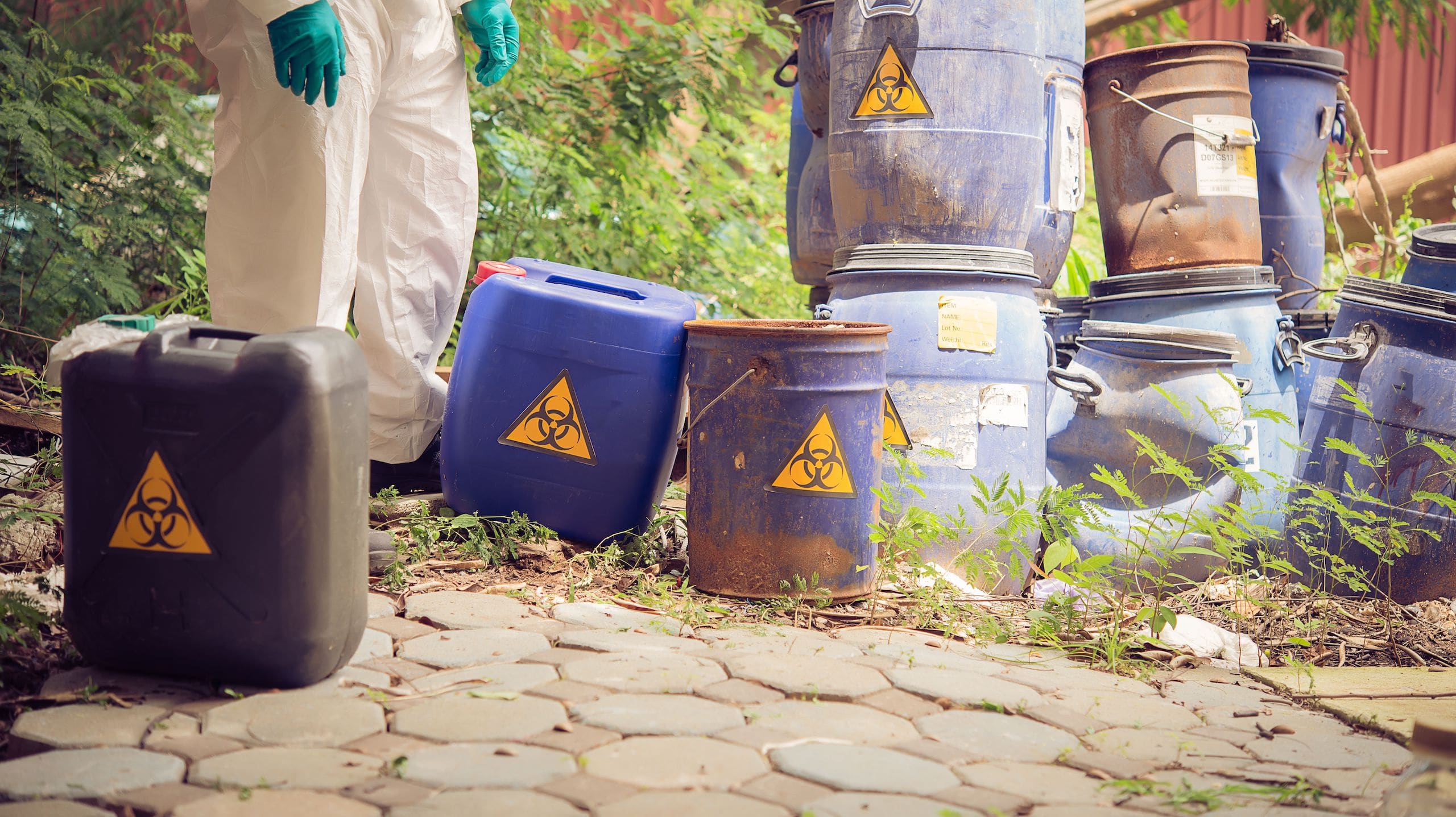
Hazardous waste includes any material contaminated with chemicals, oils, asbestos, or heavy metals. Examples might include soil affected by fuel spills, ash from fire-damaged structures, or old building materials containing lead paint or asbestos fibres. These wastes require laboratory testing to determine their classification and must be handled under the Hazardous Waste Regulations 2005. Widdington works with accredited testing laboratories and specialist disposal facilities to ensure complete compliance and traceability.
Before excavation begins, it is good practice to sample and test soil if there is any chance of contamination. The results determine whether the material is inert, non-hazardous, or hazardous. Every load leaving your site must be accompanied by a waste transfer note or, for hazardous materials, a consignment note. These documents form part of your Duty of Care under the Environmental Protection Act 1990 and must be kept for a minimum of two years (or three for hazardous waste).
Widdington Recycling manages this process from start to finish, taking care of sampling, paperwork, and haulage so you can focus on completing your project. With our guidance, waste is always classified correctly, disposed of responsibly, and documented for full compliance.
Successful site clearance depends on having the right equipment for the job. Our modern fleet of vehicles and experienced operators ensure fast, safe removal of waste from any type of site — from domestic driveways to large-scale infrastructure projects. All Widdington drivers are fully trained, and our vehicles are maintained to the highest standards for reliability and environmental performance.
Our grab lorries are ideal for sites with restricted access or limited space for loading. The hydraulic arm allows waste to be lifted directly from over fences or walls, removing the need for additional machinery. Each grab lorry can carry up to sixteen tonnes of material, making them perfect for quick, efficient spoil removal.
For large-volume movements, tipper lorries provide a cost-effective solution. They can transport up to twenty tonnes per load and are used for major excavation, infrastructure, and commercial developments. On-board weighing systems help ensure every load is safe and compliant before leaving the site.
As part of our plant hire service, we also supply excavators and loading shovels to support muck away and site clearance operations. This allows clients to manage excavation, loading, and clearance using one coordinated supplier, improving efficiency and reducing downtime.
In the next section, we will outline best practices for site clearance, including waste segregation, ground preparation, and environmental protection measures that help keep every job safe and compliant.
Clearing a site efficiently requires careful planning, coordination, and compliance with environmental and safety standards. At Widdington Recycling, we work with construction companies, developers, and private clients to ensure that all waste removal and clearance activities meet UK regulations while keeping projects on time and within budget. The following best practices form the foundation of every successful site clearance operation.
Before work begins, it is essential to plan access routes for vehicles, identify areas for temporary waste storage, and confirm where services or utilities are located underground. Clear communication between site managers and drivers helps prevent delays and damage to infrastructure. We often recommend scheduling muck away collections alongside excavation works to minimise handling and avoid double movement of materials.
Separating different waste streams early saves time and money later. Keep inert materials such as soil and rubble separate from wood, metal, or general waste. This segregation increases recycling rates and reduces the need for expensive sorting or mixed-waste charges. Widdington can provide guidance on labelling piles and skips correctly to maintain compliance with the Waste (England and Wales) Regulations 2011.
When there is any doubt about soil quality, arrange for Waste Acceptance Criteria (WAC) testing. This determines whether the material is inert, non-hazardous, or hazardous and dictates the correct disposal route. Our team can organise sampling and laboratory analysis to prevent reclassification issues or costly rejected loads later on.
Heavy machinery, uneven terrain, and large waste volumes make site clearance potentially hazardous. Always maintain safe exclusion zones for loading operations, wear appropriate personal protective equipment, and ensure that only trained operatives handle plant and lifting gear. All Widdington staff hold the relevant CPCS or NPORS qualifications and follow strict site-safety protocols.
Good site management reduces pollution and environmental risk. Use silt fencing or drainage covers to prevent sediment from entering watercourses, especially during wet weather. Avoid overloading lorries or tracking mud onto public roads, as this can result in fines or enforcement action. Widdington vehicles are fitted with sheeting systems to contain loads and minimise dust emissions.
Whenever feasible, reuse excavated material on site or send it for recycling. Clean concrete, brick, and hardcore can be crushed and repurposed as sub-base or backfill. Widdington Recycling operates a dedicated processing facility that converts waste into reusable aggregates, closing the loop between waste generation and material supply. This approach supports sustainable construction and helps clients meet environmental targets.
Every transfer of waste must be recorded with a waste transfer note or consignment note. Keeping accurate records is not only a legal requirement under the Environmental Protection Act 1990 but also essential for transparency and project audits. We provide digital copies of all paperwork, making compliance simple and traceable.
Following these best practices ensures your site remains safe, compliant, and environmentally responsible. In the next section, we will highlight a real-world example — a large-scale housing development in Essex — to show how effective planning and coordination can make muck away operations faster, cleaner, and more cost efficient.
Widdington Recycling recently supported a multi-phase housing development in Essex that required large-scale excavation and site preparation before the foundations could be laid. The project involved removing more than 2,500 tonnes of mixed soil and hardcore from a site with limited access and strict environmental controls. The client’s primary goal was to clear the site quickly while keeping disposal costs down and maintaining compliance with waste-management regulations.
Before work began, we carried out an initial site assessment to evaluate ground conditions, access routes, and expected waste composition. Early soil sampling confirmed that the majority of the material was inert, which allowed it to be processed and recycled at our licensed facility rather than sent to landfill. This classification significantly reduced both the environmental impact and the project’s overall disposal costs.
We deployed a combination of grab and tipper lorries to handle daily collections, operating in coordination with the client’s excavation schedule. Tight access around the perimeter of the site made grab lorries the best solution for removing waste quickly without interrupting other contractors. Each load was weighed, recorded, and accompanied by a waste transfer note to maintain full traceability.
The client praised Widdington’s ability to plan around their build schedule and provide transparent documentation at every stage. By integrating waste removal and aggregate supply through a single provider, they reduced costs and simplified logistics, demonstrating the advantages of a coordinated approach to muck away and recycling.
Our experience from this and similar projects highlights that effective planning, accurate classification, and reliable logistics can make a measurable difference to both the environmental and financial performance of any construction site.
The cost of muck away and site clearance depends on several key factors. Understanding these elements helps ensure you receive accurate pricing and can plan your budget effectively from the outset.
Widdington Recycling offers clear, competitive pricing with no hidden extras. Our team can provide same-day quotations once we know your location, load type, and volume. For larger or ongoing projects, we also offer flexible contracts and scheduled collections tailored to your build programme.
In the next section, we will cover how to get in touch with our team and arrange your first collection or site assessment.
Looking for fast, compliant muck away or site clearance in Essex or Hertfordshire? Widdington Recycling offers a complete service, from initial waste assessment to final disposal and documentation. Whether you are managing a small building site or a multi-phase development, our modern fleet of grab and tipper lorries can handle waste quickly and efficiently.
We are fully licensed by the Environment Agency and committed to recycling wherever possible. By processing waste at our own facility, we minimise the amount sent to landfill and create sustainable recycled aggregates that feed back into local construction projects. Our customers benefit from reliable service, detailed reporting, and the confidence that every job is handled in line with current UK environmental legislation.
From single-load removals to ongoing site clearance contracts, we tailor our services to meet your project’s specific needs. We can also coordinate aggregate delivery with waste removal, providing a cost-effective, sustainable solution for your site operations.
Get in touch today to arrange a free site assessment or receive a no-obligation quotation. Our team is here to help you choose the right vehicles, schedule efficient collections, and ensure your project runs smoothly from start to finish.